Sunday, 28 April 2013

Tom Jenkins and The Palm Court Orchestra - The Laughing Violin EP, HMV 7EG 8035

Tom Jenkins was born in Leeds in 1910 and at twenty-five joined the Hastings Municipal Orchestra at their conductor, Julius Harrison’s request. For the next few years he played the odd concerto engagement with the orchestra and followed the usual migratory travels for British orchestral musicians of the time; seasonal spa work and light music. In 1936 he joined J.H. Squire’s very popular Celeste Octet, a launching ground for many string talents, and his employer arranged for him to take lessons from the now London resident Carl Flesch (Jenkins had earlier studied with Edward Maude, leader of the Leeds Symphony Orchestra and with Charles Woodhouse, the long time leader of Henry Wood’s Proms). Jenkins was appointed to lead the orchestra of the Grand Hotel Eastbourne in 1938, which typically comprised a solo violin, two violins, viola, cello, bass, piano and organ/celeste. Prestigious positions followed with the BBC Salon Orchestra and the Grand Hotel, after Albert Sandler’s miserably early death, but the biggest move was a projected one to lead Beecham’s RPO, thwarted by Jenkins’ illness – a lung was removed and, weakened, he took a position as an orchestral player. He died in 1957, like Sandler before him still in his forties.


Saturday, 27 April 2013

Orkestris "Bellacord" ‎– Donavas Viļņi / Vines Meža Stāsti, Bellaccord Electro ‎3226


Label:
Bellaccord Electro ‎– 3226
Format:
Shellac, 10" 
Country:
USSR, Latvian SSR
Released:
after 1940
Genre:

Bellaccord Electro

Bellaccord Electro, generally known as Bellaccord, is a record label founded in Latvia. After the invasion of Latvia by the Soviet Union in 1940, the company produced records under the labels Rīgas skaņuplašu fabrika (1940-41 and 1945-57), Baltija (1957), Līgo (1958-61) and Melodija (1961-64). Company was founded in the spring of 1931 in Riga on Kalntsiema street 40. Its founder was Helmar Rudzītis (Helmārs Rudzītis) - owner of the largest book publishers in Latvia "Gramatu draugs." 


In 1920 the name of Rudzitis echoed over the country - he was the owner of the largest book publishers in Latvia, but later suddenly decided to start a new business. In 1931, to him went a famous Latvian opera singer, who had just returned from a tour in Germany.
"He told me that there is a great excitement about records. "And why don't we start producing records in Latvia? - He suggested to his friend. - In Germany, there are people willing to help."
Premises for the future enterprise were bought soon after - in Kalnciema street 40. It was much more difficult to get modern equipment. In the end, it was bought in Germany sound equipment company Neumann, now engaged in the production of high-quality professional microphones. 
"I came up with the name - "Bellacord - Electro ", - says Rudzītis. - The first word is meant to be a great sounding records, the second - that they are released for the electronic equipment."
However, the first records were far from perfect. Squeak, squeak. Rudzītis  changed one sound engineer after another until he got what he wanted. In 1934 in an exhibition at Stockholm Latvian records were also represented. "And could you play anything?" - Asked the Prince Gustav Albert, who was among the visitors. "Gorgeous" - he said after listening and shook Rudzitis' hand. "I did not wash her for a week", - said the head of the factory.
Quality of Riga records was noticed two years later at an exhibition in Brussels. There the entrepreneur from Latvia met the famous gypsy artist Morfessi, an immigrant from Russia.
On the "Bellacord" label mostly released dance music which then enjoyed the highest demand. As for the songs, in the beginning the company focused on the Latvian audience - national recording artists. Later Rudzītis met Russian Petr Leshchenko and offered to sign for "Bellacord."
The success was enormous. Records with the singer soon resounded around the world: in Bucharest, Berlin, Paris, New York, Shanghai. Experts noted particularly "phonogenic voice," and those envious of Leshenko called him "singer for records" (meaning his skill showed more in a studio than on the stage).
Popularity came not only to him, but also to the authors of his songs: Oscar Strok, Mark Maryanovsky.


In November 1940, the factory was nationalized, but the name «Bellacord Electro» held out after nationalization and was replaced by a featureless RZG (Riga factory records) label only in 1950. Records released in 1940/41 are easily identified by the letters "NU" in the upper part of the label, that stand for "nationalized company", as well as by usage of prerevolutionary (old fashioned) Russian spelling of the inscriptions. Postwar labels contain a notice stating that the record belongs to the relevant ministry. In 1950 the factory was called «Baltija», then «Līgo» - which is a traditional Latvian celebration on the summer solstice - Midsummer Day, similar to Russian Ivan Kupala. Amongst Russian collectors, these labels are called "The Seagull" as the image of the trademark is reminiscent of the bird. In August 1961, the company was renamed «Melodija» Records and released under this label until June 1964. After that all records published in Latvia went under the "Melody" label.

  
Examples of labels as from 1940/41 to 1950

Dave Edmunds - I Knew The Bride/Back To Schooldays, Swan Song SSK 19411


"I Knew the Bride (When She Used to Rock 'n' Roll)" is a song written by Nick Lowe and first popularized by Dave Edmunds. It was released on Edmunds's 1977 album Get It and a year later in a live version by Nick Lowe's Last Chicken in the Shop on Live Stiffs Live, a compilation released by Stiff Records.
DAVE EDMUNDS   7"Single -I Knew The Bride (EX+) 
Single sold in company sleeve                         Plain sleeve issue

Swan Song Records

Swan Song Records was a record label launched by Led Zeppelin on May 10, 1974. It was managed by Led Zeppelin's manager Peter Grant and was a vehicle for the band to promote its own products as well as sign artists who found it difficult to win contracts with other major labels. The decision to launch the label came after Led Zeppelin's five year contract with Atlantic Records expired at the end of 1973. Atlantic Records ultimately distributed the label's product.


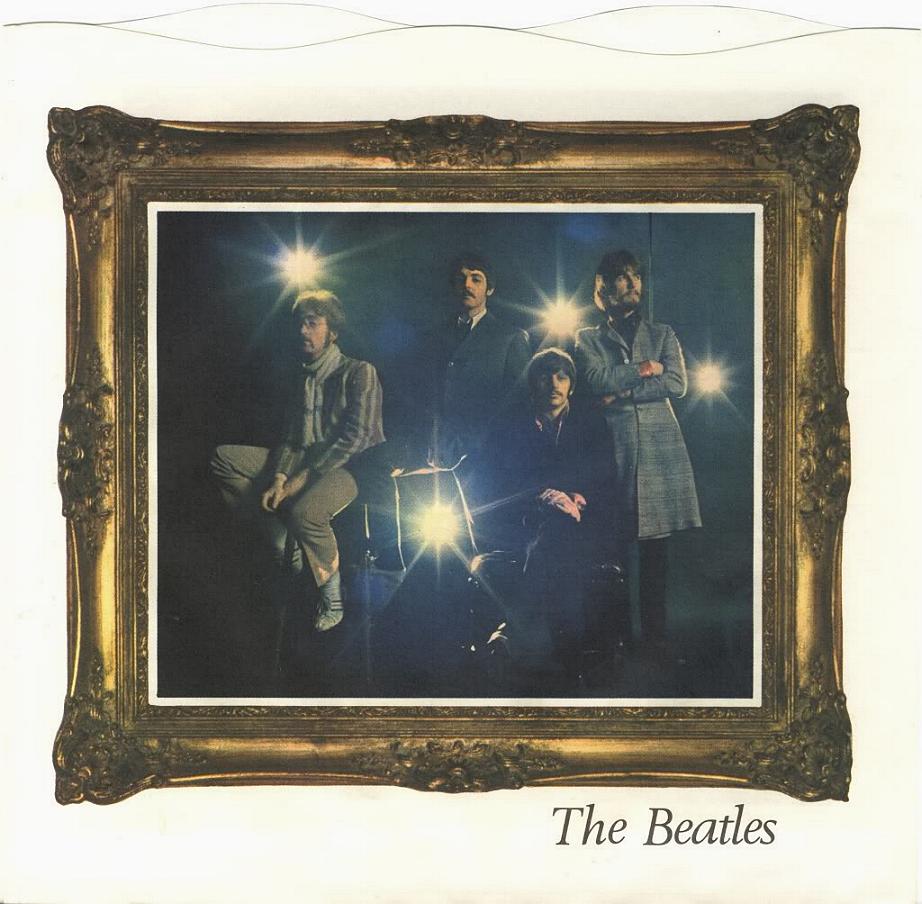
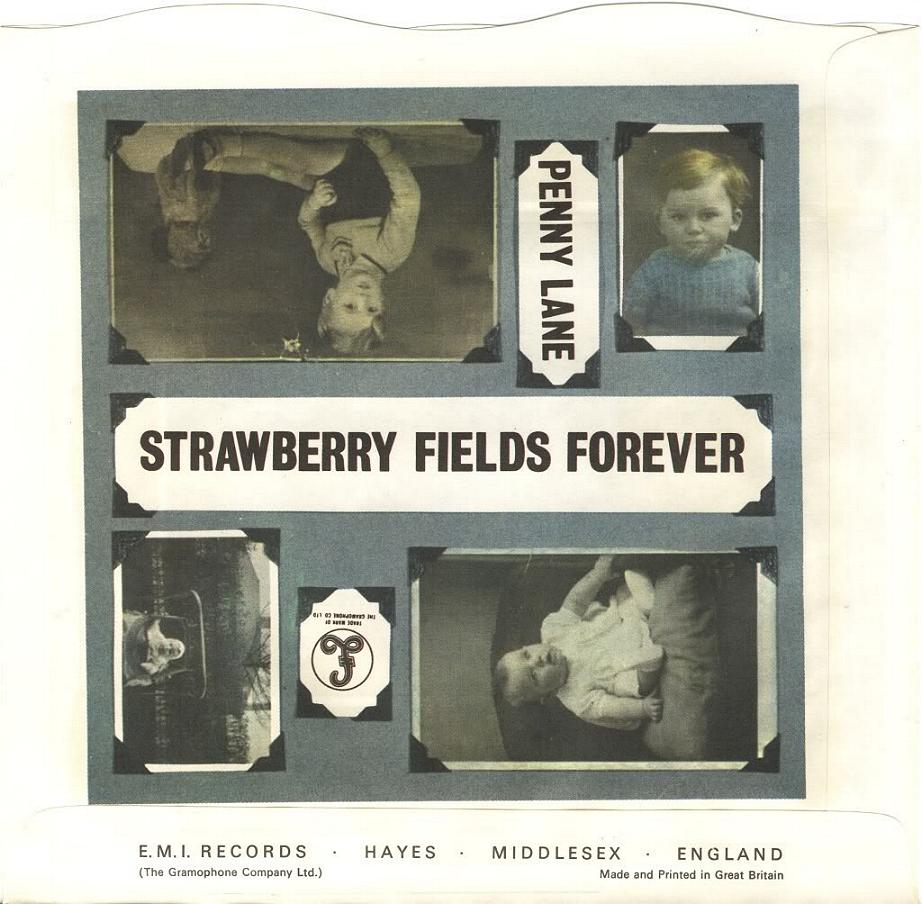
The Beatles - Strawberry Fields Forever / Penny Lane, Parlophone R 5570


1. First pressing, February 17, 1967. The initial 250,000 copies of the single were packaged with a wavy cut at top full-color picture sleeve. Additional copies of the sleeve were manufactured for EMI for export to foreign countries, including Ireland, Sweden and Denmark.
  

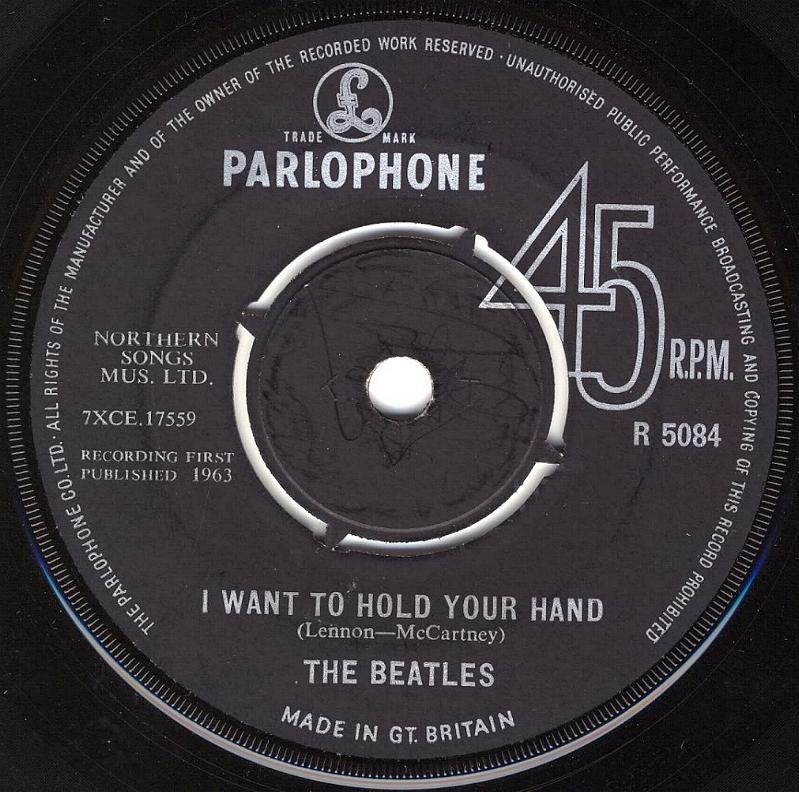
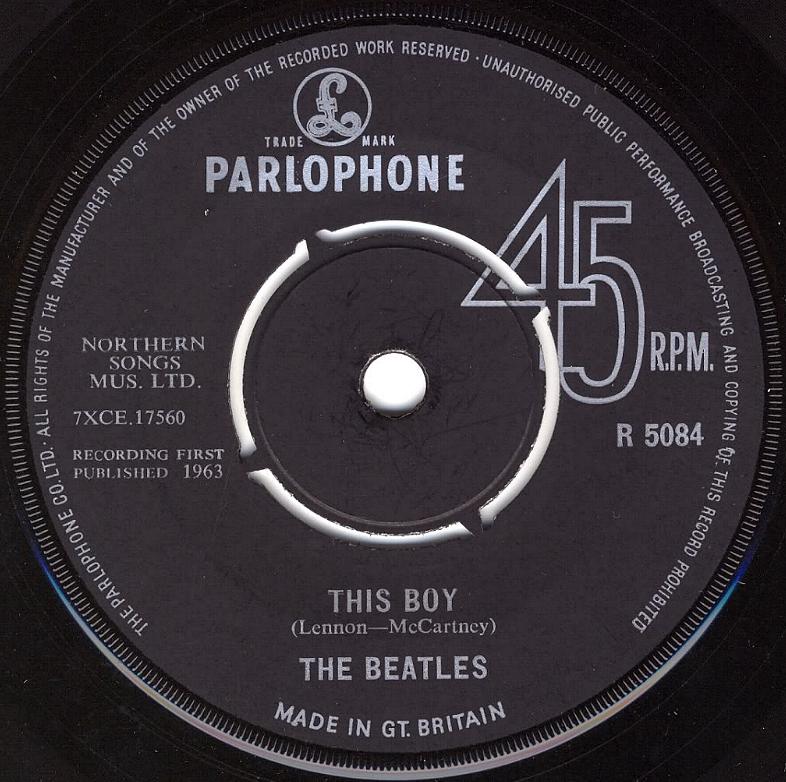
The Beatles - I Want To Hold Your Hand/This Boy, Parlophone R 5084


1. First pressing, November 29, 1963. The records were housed in the Type 3 company sleeves. Black label with silver print. The publishing year was printed on the label, as “RECORDING FIRST PUBLISHED 1963″. The beginning of the perimeter print was written with a fully capitalized “PARLOPHONE CO. LTD.”. Tax code KT. Push-out center. Matrix numbers: Side A: 7XCE 17559-1N, Side B: 7XCE 17560-1N.

Type 1 labels do not have “NCB” at the end of the publishing credit:
  
Parlophone R 5084 - I Want To Hold Your Hand/This Boy (First pressing, with "The Parlophone Co. Ltd" in upper-case only, Matrixes: 7XCE 17559-1N/7XCE 17560-1N, in Type 1 sleeve)... 15 GBP

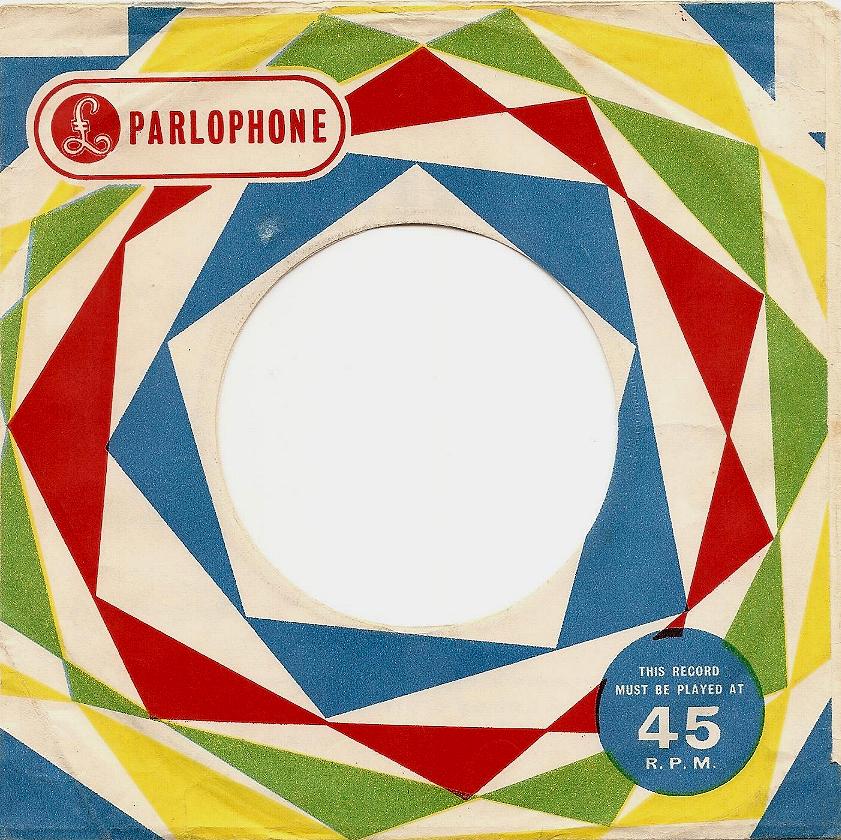
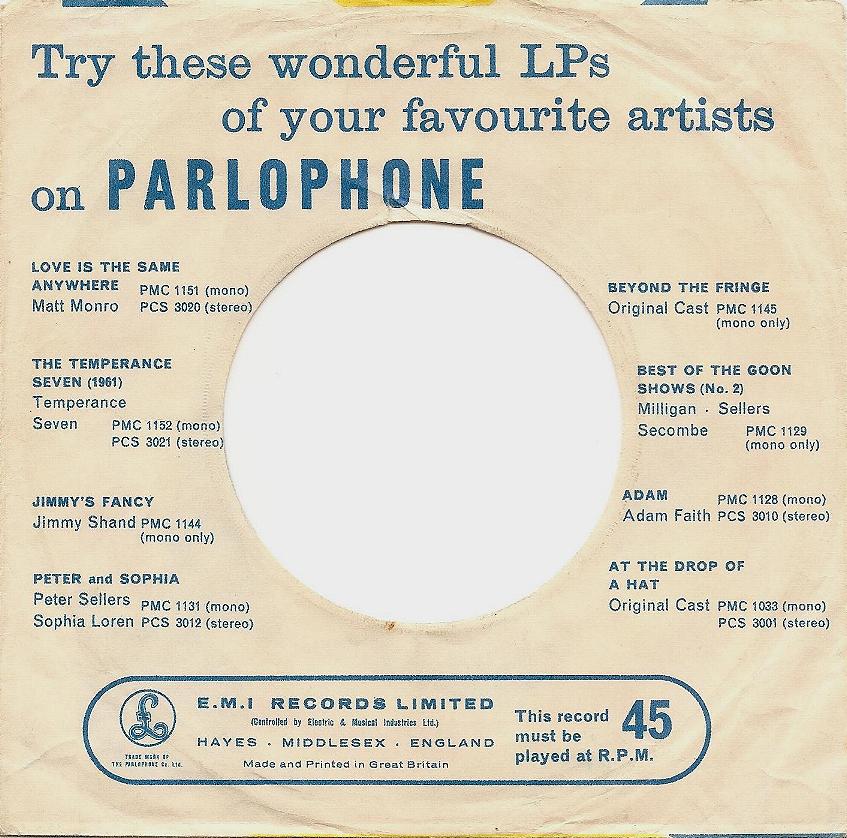
The Beatles Parlophone company sleeves


The changes in company sleeve designs were similar to those of the other EMI labels and the changes between the different designs occurred at approximately the same times.

Type 1 sleeve. Blue, red, yellow and green multicolored sleeve designed in the late 50's to be used with the red label. Used from 1958 until 1963 with Parlophone series 45-R 4441 – 45-R 4988 including The Beatles singles 45-R 4949 “Love Me Do” and 45-R 4983 “Please Please Me”.


Shirley Bassey - Shirley Bassey, Columbia 33SX 1382


Shirley Bassey is a 1961 album by Shirley Bassey, her fifth studio album and her third with EMI/Columbia. Bassey was accompanied by Geoff Love and his orchestra and The Williams Singers (The Rita Williams Singers). The album spent eleven weeks on the charts, beginning in February 1962, and peaking at #14.
This album was issued in mono and stereo. This album's monetary value may be very low, but nevertheless it is one of the best albums of the 60's.

  
Original mono sleeve 1961

Tuesday, 23 April 2013

Richard Tauber - My World Is Gold Because You Love Me, Parlophone RO 20287

Heart's Desire is a 1935 British musical drama film directed by Paul L. Stein and starring Richard TauberLeonora CorbettKathleen KellyDiana Napier and Frank Vosper. Its plot involves a young opera singer who is discovered in Vienna and brought to London where he rises to stardom. The film was made at Elstree Studios in April/May 1935, and had its charity premiere at the Regal Cinema, Marble ArchLondon on 17 October that year. It was part of a cycle of British operetta films.


My World Is Gold Because You Love Me - 'hearts Desire' - PARLOPHONE (British) - RO.20287 - ; Composer: Rudolf Sieczynskimatrix: CE 7056-2; Location: London~3 min